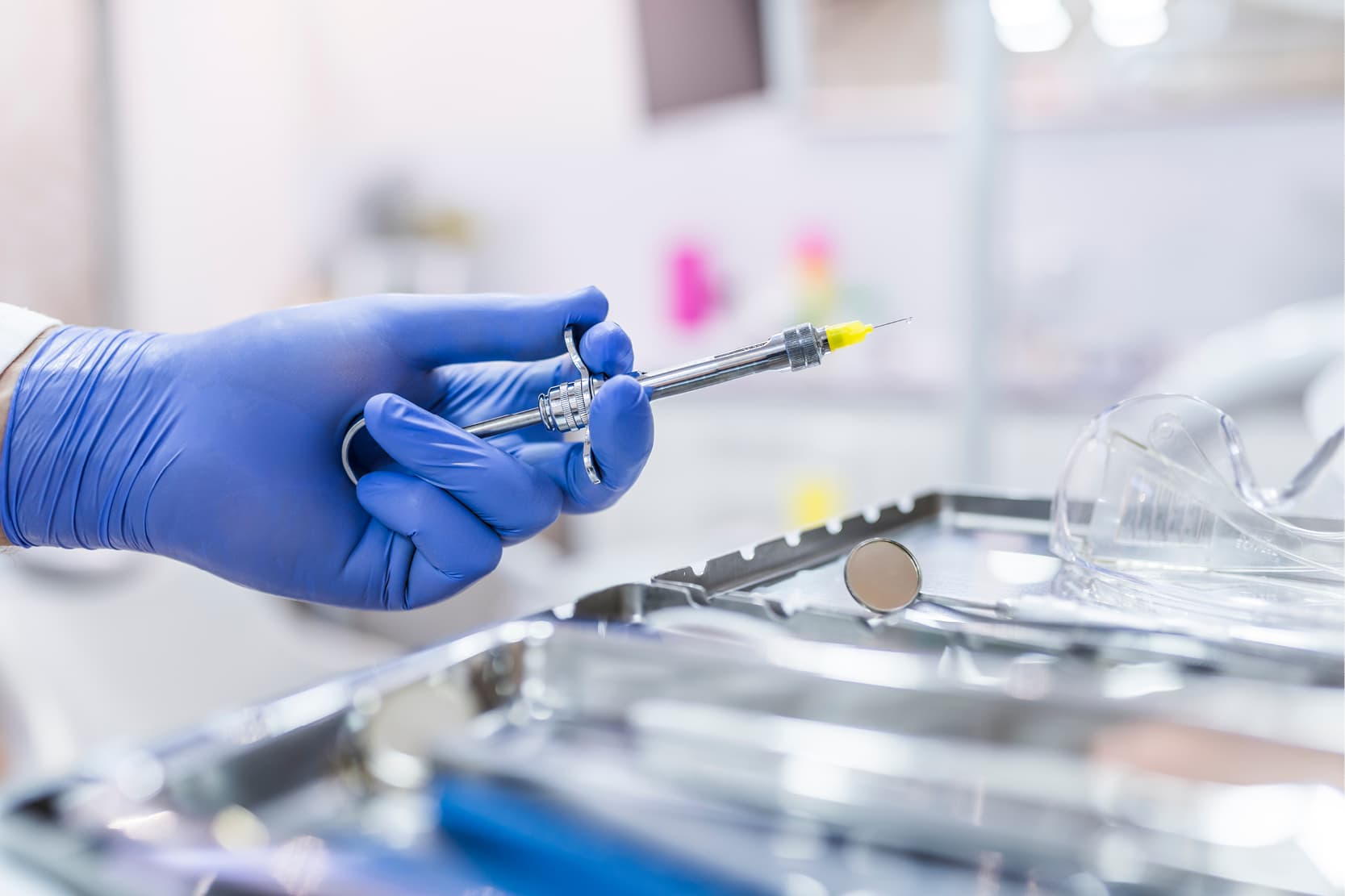
Accidental injuries from needles or sharp objects are one of the main occupational hazards for dental staff (1). Frequent use of needles, sharp instruments and direct contact with blood or contaminated saliva during dental procedures expose staff to the risk of transmission of pathogens, particularly hepatitis B (HBV) virus, hepatitis C (HCV) virus and HIV.
While prevention is key, it is essential to have a clear protocol to follow in the event of exposure.
Regulatory context and prevention
In most countries, dental practices are required by national regulations to have a written exposure control plan, provide training, use safety devices, good operating practices and ensure vaccination (especially against HBV).
Standard precautions require that all blood and some body fluids (such as saliva visibly contaminated with blood) be treated as potentially infectious. Correct use of needles and their safe disposal are essential measures. (1-3)
There are various protocols for managing this type of injury that differ from country to country, but the key points remain largely unchanged.
Immediate measures to be taken after an accidental needlestick injury in dentistry
If a healthcare worker is accidentally pricked by a potentially contaminated needle or instrument, the following should be done:
- Stop the activity you are doing and wash the wound: Gently let the wound bleed if possible, then wash with soap and water. If exposure involves mucous membranes or eyes, rinse thoroughly with water or saline solution. (2,4)
- Immediately inform your manager or supervisor so that the exposure protocol can be activated. Complete any documentation for reporting the injury.
- Assess the risk of exposure: In this regard, the depth of the wound, the type of instrument (hollow or solid needle), the visible presence of blood and the use of protective devices must be considered. (5,6)
- Perform baseline blood tests on the worker, including tests for HBV, HCV and HIV. If vaccinated against hepatitis B, also check the anti-HBs antibody titre. (2,4,6)
Patient testing
Inform the patient of what has happened. If the patient is identifiable, it is recommended, if permitted by law, to obtain consent to perform tests for HBV, HCV and HIV (4) and to obtain the results of the blood tests as soon as possible to check for any positivity.
Post-exposure prophylaxis (PEP) and follow-up
- HBV: If the healthcare worker is not vaccinated or is not immune, it may be necessary to administer HBV-specific immunoglobulin and initiate vaccination. (4,6)
- HIV: If the risk is high, it is recommended to start antiretroviral PEP within a few hours. (4,6)
- HCV: There is no specific prophylaxis. Carry out clinical and serological monitoring. (4)
- Follow-up: Serological checks at 6 weeks, 3 months, 6 months and, sometimes, 12 months. (4)
Documentation
Each exposure incident must be documented in detail:
- Type of instrument, how the accident occurred, use of PPE, identification of the source patient.
- Operator and patient test results (if available).
- Recording in the sharps injury log if required.
Employer’s responsibility
- Provide free medical assessment and PEP.
- Ensure the confidentiality of health data.
- Train staff and update the exposure plan. (6)
Timing and risk determination
Timeliness is crucial. HIV PEP is most effective if started within 72 hours. The risk assessment considers (5,7):
- Depth of the wound
- Visible presence of blood
- Needle type (hollow = higher risk)
- Serological status of the source patient
Psychological support
Fear of infection can cause significant anxiety. It is important to offer psychological support and reliable information about the real risks (often much lower than perceived).
Improving post-accident systems
After the accident (1):
- Analyse the causes
- Strengthen prevention measures
- Improve operational flows and workplace ergonomics
- Review protocols and retrain staff
Accidental needlestick injuries in dentistry: points to bear in mind
Accidental needlestick injuries in dentistry pose a serious but preventable risk. Having a clear protocol well understood by all the staff ensures a rapid and effective response, minimising the risk of serious infections.
The employer’s obligation to provide training, protection and assistance is fundamentally important. However, prevention remains the most effective strategy.
- https://www.cdc.gov/dental-infection-control/hcp/summary/standard-precautions.html?utm
- https://www.cdc.gov/dental-infection-control/hcp/dental-ipc-faqs/occupational-exposure.html?utm
- https://www.cdc.gov/mmwr/preview/mmwrhtml/00033634.htm?utm
- Lokesh, U., Srinidhi, D., & Sudhakara Reddy, K. (2014). Post exposure prophylaxis to occupational injuries for general dentist. The Journal of Indian Prosthodontic Society, 14(Suppl 1), 1-3.
- Smith AJ, Cameron SO, Bagg J, Kennedy D. Management of needlestick injuries in general dental practice. Br Dent J. 2001 Jun 23;190(12):645-50. doi: 10.1038/sj.bdj.4801064. PMID: 11453154.
- https://www.ada.org/resources/research/science/employer-obligations-after-exposure-incidents-osha?utm
- https://www.health.ny.gov/diseases/aids/general/pep/docs/dental_toolkit.pdf?utm
Would you like more information about Zhermack Dental products and solutions?
Contact us
 Zhermack SpA has been one of the most important producers and international distributors of alginates, gypsums and silicone compounds for the dental sector for over 40 years. It has also developed solutions for the industrial and wellbeing sectors.
Zhermack SpA - Via Bovazecchino, 100 - 45021 Badia Polesine (RO), Italy.
Zhermack SpA has been one of the most important producers and international distributors of alginates, gypsums and silicone compounds for the dental sector for over 40 years. It has also developed solutions for the industrial and wellbeing sectors.
Zhermack SpA - Via Bovazecchino, 100 - 45021 Badia Polesine (RO), Italy.


