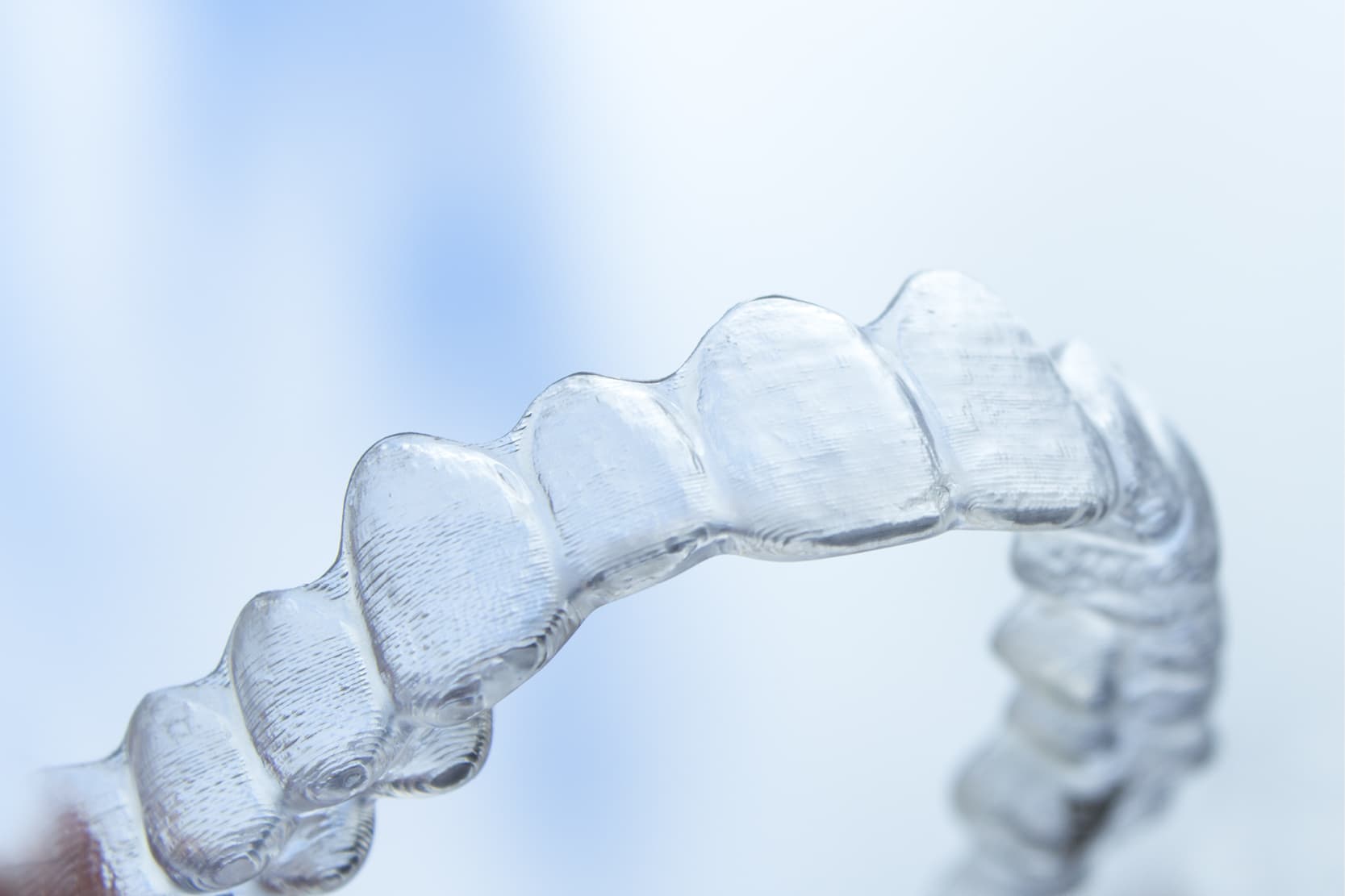
Clear aligner therapy has quickly gained popularity because of the improved aesthetics and comfort it offers compared to fixed braces. These characteristics have led a large number of adult patients to undertake orthodontic treatment.
When approaching the adult patient orthodontically, prosthetic-surgical needs are often encountered; for this reason, exclusively orthodontic treatments have been transformed into more complex multidisciplinary treatments.
However, a growing body of clinical studies and systematic reviews have highlighted intrinsic limitations in terms of biomechanics, predictability and long-term stability. Major challenges include limited biomechanical capability (especially in some movements), material limitations, dependence on close patient cooperation, reduced effectiveness in complex cases and gaps in the literature regarding long-term stability and adverse effects.
Recognising these limitations is essential for appropriate case selection and proper management of patient expectations. Aligners have been shown to be effective in mild to moderate cases, but their effectiveness in complex movements remains debatable (1).
Biomechanical limits
One of the main limitations of clear aligners lies in the intrinsic biomechanics of the system and the expression of the force vectors that are applied. Unlike fixed appliances, which use archwires and brackets to provide continuous, multi-vector forces, aligners act through surface pressure generated by the deformation of the plastic material. This limits the precision and intensity of the applicable force vectors at a biomechanical level (2).
Specifically, the use of aligners makes some movements particularly complex.
- Torque and root control: The ability of aligners to control root inclination or torque is limited. In cases with extractions, for example, apical divergences can be observed (3).
- Bodily movements: Obtaining a pure translation of the tooth is very complex since an effective force couple must be inserted and, often, tipping is observed first.
- Rotation of cylindrical teeth: Teeth such as canines or premolars are difficult to rotate due to their shape and poor grip of the aligner.
- Vertical movements: Intrusions and extrusions are among the least predictable movements.
A recent international expert consensus study confirmed that biomechanical limitations remain among the major challenges of aligner therapy (4).
Material limitations and predictability
The physical properties of the plastic materials used to make the aligners can also adversely influence the treatment. In fact, the materials undergo stress deformations, expansion due to the absorption of humidity and loss of rigidity with use (5).
Clinical studies show that some planned movements often do not materialise in practice. In particular, movements such as intrusions, rotations and tipping are less accurate than digitally programmed predictions (6). In a systematic review, many tooth movements were only partially predictable and often required multiple rounds of “refinement” (7).
Complexity of cases and indications
Given the limited biomechanics, aligners are only indicated for mild or moderate malocclusions. (1,4). The strongest indications are for moderate crowding, mild spacing and simple corrections. Severe malocclusions, impacted teeth and significant skeletal misalignments are still contraindicated.
Comparative studies show that fixed appliances achieve better results in complex cases, especially in the presence of extractions or the need for root control (8).
Furthermore, a recent review (9) has highlighted how the correction of anterior open bite in adult patients with aligners requires additional aids and more treatment cycles, with an outcome often not as effective as expected.
Patient cooperation
Another critical limitation is the complete correlation of treatment effectiveness with the patient’s complete cooperation. In fact, aligners must be worn for at least 20–22 hours a day to be effective. Poor compliance may lead to delays or failures in treatment.
A systematic review confirmed that patient cooperation is a key factor for clinical success (10). Furthermore, a recent international consensus has underlined how predictability strongly depends on cooperation (4).
Last but not least, as they are removable, aligners can get lost, damaged or removed for too long, thereby breaking the continuity of force and consequently compromising the success of the treatment.
Stability and long-term data
The long-term stability of aligner treatment is a topic that has not yet been fully explored. Available studies have limited follow-ups and small sample sizes, making it difficult to draw definitive conclusions; similarly, the risk of recurrence and root damage have also been hardly investigated. (4,11)
Furthermore, concerns are emerging about possible specific adverse effects caused by aligners, such as the long-term release of microplastics or impacts on the morphology of the temporomandibular joint (1).
Dental aligners: final considerations
Clear aligners offer aesthetic and practical benefits, but their biomechanical limitations, the need for close cooperation with the patient and the low predictability of some specific movements reduce their effectiveness and predictability in more complex cases. Clinicians must exercise caution in selecting appropriate cases, and further research is needed to improve materials and clinical protocols, as well as to ensure comprehensive long-term data collection.
- Hartogsohn, C. R., & Sonnesen, L. (2025). Clear aligner treatment: indications, advantages, and adverse effects—A systematic review. Dentistry Journal, 13(1), 40. https://www.mdpi.com/2304-6767/13/1/40
- Doomen, R. A., Aydin, B., & Kuitert, R. (2018). Possibilities and limitations of treatment with clear aligners. An orientation. Nederlands tijdschrift voor tandheelkunde, 125(10), 533-540.
- Patel, H. G., Kubavat, A. K., Patel, K. V., Kayastha, Y. A., & Patel, S. H. (2025). Clear aligner effectiveness in first premolar extraction orthodontic cases: A systematic review of tooth movement predictability. Journal of Oral Research and Review, 17(2), 153-163.
- D’Antò, V., Oliva, G., Nieri, M., Clauser, T., Statie, M. D., Nucci, L., … & Franchi, L. (2025). Indications and limits of clear aligner therapy: an international modified Delphi consensus study. Progress in Orthodontics, 26(1), 28.
- Nugent, G., Munoz, A., Louca, C., & Vichi, A. (2025). In Vitro Flexural Testing of Clear Aligner Materials: A Scoping Review of Methods, Results, and Clinical Relevance. Applied Sciences, 15(13), 7516.
- Bilello, G., Fazio, M., Amato, E., Crivello, L., Galvano, A., & Currò, G. (2022). Accuracy evaluation of orthodontic movements with aligners: a prospective observational study. Progress in Orthodontics, 23(1), 12.
- Johal, A., Fleming, P. S., Al Jawad, F., & DiBiase, A. T. (2019). Effectiveness of clear aligner therapy for orthodontic treatment: A systematic review. Orthodontics & Craniofacial Research, 22(3), 133–142. https://pubmed.ncbi.nlm.nih.gov/31651082/
- Zhu, M., King, G. J., & Rabie, A. B. M. (2019). A comparison of treatment effectiveness between clear aligner and fixed appliance therapies. BMC Oral Health, 19, Article 205. https://bmcoralhealth.biomedcentral.com/articles/10.1186/s12903-018-0695-z
- Olteanu, N. D., Romanec, C., Cernei, E. R., Karvelas, N., Nastri, L., & Zetu, I. N. (2025). Scoping Review—The Effectiveness of Clear Aligners in the Management of Anterior Open Bite in Adult Patients. Medicina, 61(6), 1113.
- Chakraborty D, Sahoo N, Dash B, Mohanty B, Jena S. Clinical Effectiveness of Clear Aligner Therapy During Interceptive Orthodontic Treatment in Adolescent Patients: A Systematic Review and Meta-Analysis. Cureus. 2025 Jul 17;17(7):e88157. doi: 10.7759/cureus.88157. PMID: 40821259; PMCID: PMC12357539.
- Vigneshkumar, V., Deepak, E. R., Ferreira, V., Waremani, A. S., Nishaevitha, N. A. K., Ammal, K. T., & Singh, G. (2024). Accuracy and Stability of Clear Aligner Treatment: A Systematic Review. Journal of Pharmacy and Bioallied Sciences, 16(Suppl 4), S3077-S3079.
Would you like more information about Zhermack Dental products and solutions?
Contact us

 Zhermack SpA has been one of the most important producers and international distributors of alginates, gypsums and silicone compounds for the dental sector for over 40 years. It has also developed solutions for the industrial and wellbeing sectors.
Zhermack SpA - Via Bovazecchino, 100 - 45021 Badia Polesine (RO), Italy.
Zhermack SpA has been one of the most important producers and international distributors of alginates, gypsums and silicone compounds for the dental sector for over 40 years. It has also developed solutions for the industrial and wellbeing sectors.
Zhermack SpA - Via Bovazecchino, 100 - 45021 Badia Polesine (RO), Italy.


