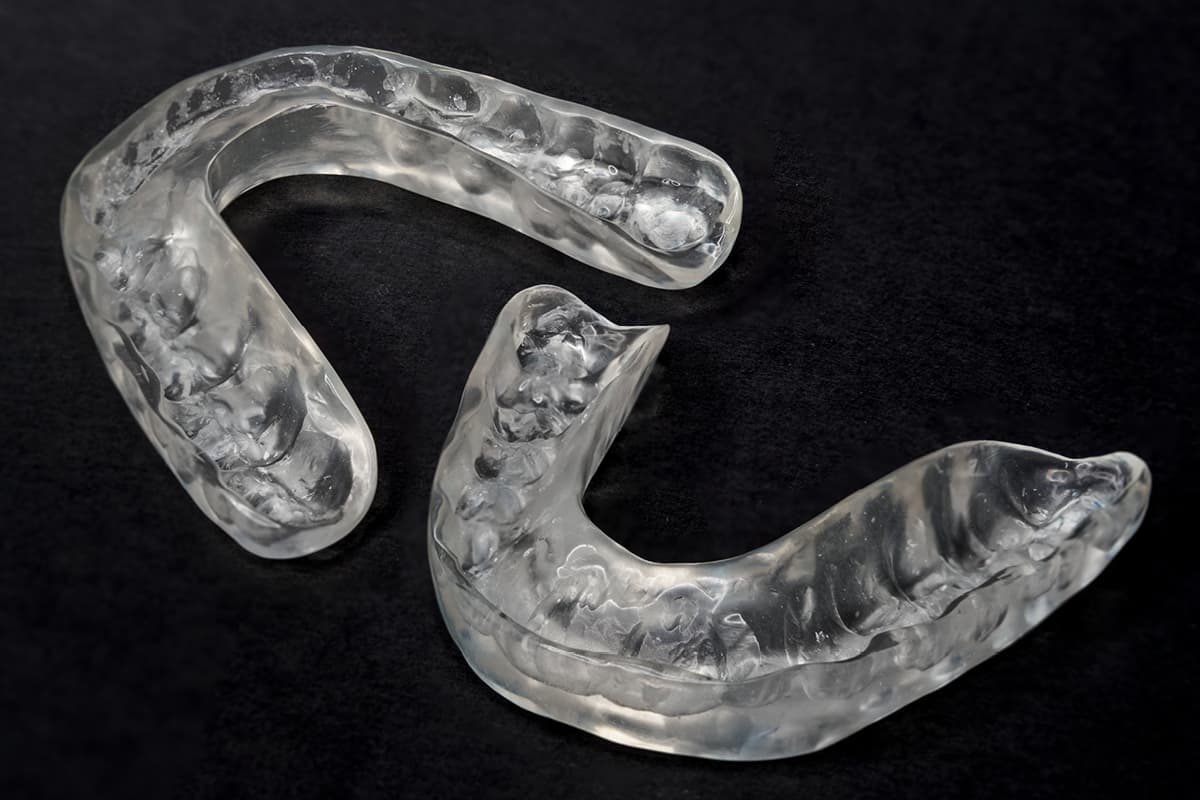
The term “bite” in dentistry creates a lot of confusion and is often not used correctly, especially among patients. There are a multitude of devices that fall under the definition of dental bite, each with specific characteristics, indications and functions.
The confusion arises from the huge number of devices available, where even the subjectivity of individual dentists can change the creation, shape and function of the device. The glossary of prosthetics defines bite or occlusal plate as “any removable artificial occlusal surface affecting the relationship of the mandible to the maxilla, used for diagnosis or therapy.” (1)
Dental bites are removable intraoral or interocclusal devices designed to cover the occlusal surfaces of the teeth and modify the relationship between the maxilla and mandible. (2,3) Their use is indicated in various clinical situations involving the masticatory muscles, the temporomandibular joint (TMJ), dental wear and occlusal instability.
How to choose the most suitable dental bite: main uses
Below are the various indications for using these devices:
Temporomandibular disorders (TMD)
One of the most common indications is the management of temporomandibular disorders (TMD), which includes disorders of the masticatory muscles, the temporomandibular joint (TMJ) and its associated structures.
Bite devices can correct temporomandibular disorders and modify occlusal relationships to reduce the load on the joint. Occlusal plates improve mandibular movement and reduce the intensity of pain in patients with TMD. (4)
Stabilisation plates have shown short-term benefits in terms of pain reduction and improved oral opening. However, over time, the effects become similar to other conservative therapies. (5)
Therefore, the use of a bite/occlusal plate is indicated in patients with TMD who present with pain, limited mandibular movements, muscle tension or joint clicking/locking.
Bruxism and dental bite
Another very common indication for occlusal plates is the protection of teeth from wear due to parafunctional habits such as bruxism or clenching. These devices act as a barrier between tooth surfaces, reducing their friction. (3)
Rigid, full-coverage occlusal plates can reduce both bruxism episodes and patient-reported symptoms, although results vary between occlusal plates. (6) However, the evidence to date is not sufficient to recommend therapy with the bite alone over other therapeutic options. (7)
Occlusal stabilisation / Pre-prosthetic / Occlusal trauma
In addition to TMD and bruxism, the use of a bite (a plate) is indicated in cases of occlusal instability; for example, before a complex rehabilitation, in changes in the vertical dimension or as a final step for the occlusal protection of prostheses or restorations. (3)
They are also used in cases of occlusal trauma to reduce joint load in degenerative TMJ disorders. (2) In this indication the bite has a protective or stabilising function.
The main types of dental bite
There are many types of dental bite, classified according to shape, function, coverage, material and therapeutic purpose. (8)
- Stabilising plate (Michigan plate)
The stabilising plate, or Michigan plate, covers the upper or lower arch and provides uniform occlusal contacts, stabilising the occlusion and helping to control muscle activation. (3) The use of this plate may lead to a short-term improvement in pain and mouth opening in patients with muscle-component TMD.
It is indicated in muscular TMDs, parafunctions and cases requiring occlusal stabilisation. This is the most commonly used type. (9) - Plate with anterior support
This type covers only the front teeth (incisors and canines) and excludes the back teeth. It is used to reduce clenching and the posterior load. (8) It is indicated in cases of muscular hyperactivity, initial management of TMD or the need to eliminate posterior interference. The main limitation is that the back teeth, not being included in the device, tend to over-erupt and cause long-term malocclusions and a tendency towards anterior open-bite. - Mandibular repositioning plate
Thanks to a specifically inclined plane, this device allows the patient’s jaw to reposition itself when in occlusion (anteriorly, laterally, etc.) to modify the condyle-disc relationship. (8) - Soft or flexible plates
Made of thermoplastic or silicone material, they ensure greater comfort and patient cooperation, but less durability and occlusal stability. (3)
They are indicated in cases of mild bruxism or as a temporary therapy. However, studies have shown that rigid plates provide more effective results in the treatment of temporomandibular disorders. (10) - Protective / sports bite
Used to protect teeth and/or restorations during contact sports activities. (3)
It has a preventive rather than therapeutic purpose.
Choosing the type of bite
The clinical decision, as always, must be based on the diagnosis, the therapeutic goal and the patient’s cooperation. The choice of material, the type of arch (upper/lower) and the period of use (night, day, etc.) also play a role in the decision.
- Layton, D. M., Morgano, S. M., Muller, F., Kelly, J. A., Nguyen, C. T., Scherrer, S. S., … & Ferro, K. J. (2023). Glossary of prosthodontic terms 2023. J Prosthet Dent, 130(4S1), e1-e126.
- Crout, D. K. (2016). Anatomy of an occlusal splint. The Academy of General Dentistry.
- Sachdeva, M., Mehta, J. N., & Dalaya, M. (2019). Occlusal splints: A review. International Journal of Current Medical and Pharmaceutical Research, 5, 4032-4035.
- Najjar, A., et al. (2020). Efficacy of occlusal splints in the treatment of temporomandibular disorders: A systematic review of randomized controlled trials. Journal of Oral & Facial Pain and Headache.
- Michelotti, A., Cecchetta, D., Farella, M., et al. (2017). Occlusal stabilization splint for patients with temporomandibular disorders: Meta-analysis of short and long term effects. Journal of Oral & Facial Pain and Headache, 31(4), 363-376.
- de Baat, C., de Visscher, J. G. A. M., Habets, L. L. M. H., et al. (2024). Comparative analysis of different types of occlusal splints for the management of sleep bruxism: A systematic review. BMC Oral Health, 24, Article 29.
- Hardy RS, Bonsor SJ. The efficacy of occlusal splints in the treatment of bruxism: A systematic review. J Dent. 2021 May;108:103621. doi: 10.1016/j.jdent.2021.103621. Epub 2021 Feb 27. PMID: 33652054.
- Albagieh H, Alomran I, Binakresh A, Alhatarisha N, Almeteb M, Khalaf Y, Alqublan A, Alqahatany M. Occlusal splints-types and effectiveness in temporomandibular disorder management. Saudi Dent J. 2023 Jan;35(1):70-79. doi: 10.1016/j.sdentj.2022.12.013. Epub 2022 Dec 28. PMID: 36817028; PMCID: PMC9931504.
- Kuzmanovic Pficer J, Dodic S, Lazic V, Trajkovic G, Milic N, Milicic B. Occlusal stabilization splint for patients with temporomandibular disorders: Meta-analysis of short and long term effects. PLoS One. 2017 Feb 6;12(2):e0171296. doi: 10.1371/journal.pone.0171296. PMID: 28166255; PMCID: PMC5293221.
- Amin A, Meshramkar R, Lekha K. Comparative evaluation of clinical performance of different kind of occlusal splint in management of myofascial pain. J Indian Prosthodont Soc. 2016 Apr-Jun;16(2):176-81. doi: 10.4103/0972-4052.176521. PMID: 27141168; PMCID: PMC4837781.
Would you like more information about Zhermack Dental products and solutions?
Contact us

 Zhermack SpA has been one of the most important producers and international distributors of alginates, gypsums and silicone compounds for the dental sector for over 40 years. It has also developed solutions for the industrial and wellbeing sectors.
Zhermack SpA - Via Bovazecchino, 100 - 45021 Badia Polesine (RO), Italy.
Zhermack SpA has been one of the most important producers and international distributors of alginates, gypsums and silicone compounds for the dental sector for over 40 years. It has also developed solutions for the industrial and wellbeing sectors.
Zhermack SpA - Via Bovazecchino, 100 - 45021 Badia Polesine (RO), Italy.


