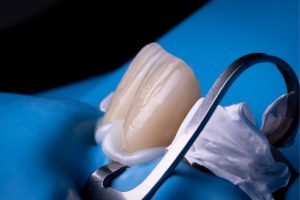
The aesthetics and health of the periodontal tissues of the teeth are determined by the condition of the gingival margins, their symmetry in the anterior region, and the restorations on the adjacent teeth. (1,2)
When the margins of the prosthetic restorations are positioned subgingivally and the emergence profile is concave, coronal migration of the gingival margin may occur, while a more convex profile more often results in apical displacement. (3,4) Consequently, by appropriately modulating the subgingival profile, it is possible to intentionally modify the position of the free gingival margin, reshaping the soft tissues in order to obtain an optimal gingival architecture. (3,4)
During rehabilitation of natural teeth, surrounding soft tissues often undergo temporary deformation following placement of the gingival retraction cord and removal of the provisional restoration. (5,6) Once the ideal shape of the provisional restoration and the surrounding soft tissues has been obtained, it is essential to accurately transfer this information to the master (working) model, so that the laboratory can reproduce an appropriate emergence profile consistent with the clinical situation.
Analogue techniques for soft tissue transfer
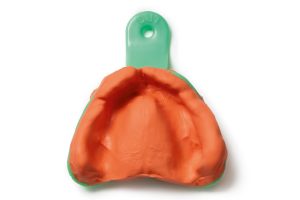
Existing analogue transfer techniques mostly use polyvinylsiloxanes as impression materials to reproduce soft tissues onto the master cast. Noh et al. (6)described a technique involving the use of autopolymerising resin applied to the buccal, palatal, and interdental surfaces of the provisional restoration, in order to accurately capture the morphology of the marginal tissues.
The assembly is then repositioned on the master cast, and a low viscosity polyvinyl siloxane is injected into the space previously created in the marginal area of the cast, thereby faithfully reproducing the gingival morphology. In this way, the dental technician can reproduce an emergence profile matching that of the provisional restoration, preventing tissue collapse and maintaining the stability of the gingival profile.
However, the morphology of the interdental papilla may not be transferred with complete accuracy to the master cast due to undercuts in the interproximal areas, which may limit full material penetration. (6)
Alternatively, Nozawa et al. (7)proposed a method involving the fabrication of three plaster casts from a silicone impression for different purposes: the first for constructing the zirconia framework, the second for manufacturing customised acrylic resin transfers, and the third for relining the provisional restoration. This procedure enables faithful duplication of the original shape of the free gingiva, avoiding distortions due to retraction or removal of the provisional restoration.
Techniques for improving the impression accuracy
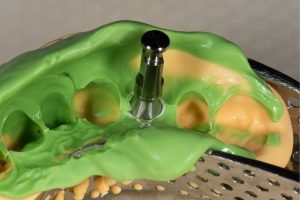
To overcome the limitations due to deformation of the polyvinyl siloxane under pressure from the prosthesis in the buccal area, where it is often thin, Kibayashi et al. (8) developed a technique which, using wax-customised zirconia copings, enables faithful replication of the subgingival profile modelled by the provisional restoration. T
he zirconia coping is placed on the silicone boxing on which the provisional was copied, and the space between coping and impression is filled with wax, resulting in a stable gingival contour replica. This replica is then transferred intraorally for the final impression and subsequently to the master cast, ensuring an emergence profile identical to that developed clinically.
This technique is among the most widely used when high-accuracy replication of the gingival margin position and the shape of the provisional in the subgingival and marginal areas is required, or of the pontic form when working with a bridge spanning multiple teeth.
In conclusion, accurate recording and reproduction of soft tissues in prostheses on natural teeth is an essential clinical-technical step for the aesthetic and biological success of rehabilitations.
The analogue techniques described—from the direct transfer of the gingival profile using resin and silicone to the use of customised zirconia copings—all aim to transfer, with maximum accuracy, the morphology of the tissues shaped intraorally, preserving the form, position, and stability of the gingival margin.
The integration of these protocols with careful design of subgingival contours and respect for periodontal biological principles enables highly aesthetic, long-lasting restorations.
Hydrorise by Zhermack for impression accuracy
Hydrorise is an addition silicone for high detail reproduction. Adequate detail reproduction is one of the key requirements for a successful impression. Zhermack has developed a product that goes far beyond standards: precision four times higher than required by European standards. *
Hydrorise fluids achieve 5-micron accuracy, enabling high detail reproduction. Another fundamental feature of Hydrorise is its high hydrophilicity. It has indeed been shown to have one of the best contact angles on the market**, contributing to accurate impressions.
* ISO 4823
** Internal data. Tests performed using the sessile drop method with a Kruss DSA30, sample size n = 17; data available upon request at info@zhermack.com
1. Berglundh T, Lindhe J, Ericsson I, Marinello CP, Liljenberg B, Thomsen P. The soft tissue barrier at implants and teeth. Clin Oral Implants Res. 1991;2(2):81–90.
2. Fu JH, Su CY, Wang HL. Esthetic soft tissue management for teeth and implants. J Evid Based Dent Pract. 2012 Sept;12(3 Suppl):129–42.
3. Kinsel RP, Pope BI, Capoferri D. A Review of the Positive Influence of Crown Contours on Soft-Tissue Esthetics. Compend Contin Educ Dent. 2015 May;36(5):352–7.
4. Zweers J, Thomas RZ, Slot DE, Weisgold AS, Van der Weijden FGA. Characteristics of periodontal biotype, its dimensions, associations and prevalence: a systematic review. J Clin Periodontol. 2014 Oct;41(10):958–71.
5. Lee H, Paek J, Noh K, Kwon KR. Precise Reproduction of Soft Tissue Structure around the Pontic Area Using Computer-Aided Design and Manufacturing. J Prosthodont. 2019 Feb;28(2):216–8.
6. Noh K, Kwon KR, Kim HS, Kim DS, Pae A. Accurate transfer of soft tissue morphology with interim prosthesis to definitive cast. J Prosthet Dent. 2014 Feb;111(2):159–62.
7. Nozawa T, Tanaka K, Tsurumaki S, Ookame Y, Enomoto H, Ito K. A three-die cast technique for duplicating free gingival form in zirconia crowns: two case reports. Int J Periodontics Restorative Dent. 2012 Aug;32(4):e135-141.
8. Kibayashi H, Takaoka R, Morita M. A method of transferring the subgingival contour of interim restorations to definitive restorations by using zirconia copings customized with casting wax. J Prosthet Dent. 2022 May;127(5):698–702.